
The Production Process of Thonet Chairs: A Detailed Guide
Thonet chairs have been a classic choice in interior decoration for years due to their elegant designs and durability. Have you ever wondered how these iconic chairs are made? In this article, we will take you through the production process of Thonet chairs step by step. From the materials used to production techniques and quality control processes, you will find all the details.
1. Materials Used
The primary materials used in the production of Thonet chairs are wood and sometimes wicker. The most commonly used types of wood are beech, oak, and maple. These woods are preferred for their durability and ease of shaping. The wood materials are sourced from sustainable forests, ensuring an environmentally friendly production process.
2. Wood Preparation
The first stage of the production process is the preparation of the wood materials. At this stage, selected types of wood are carefully cut and dried for a certain period. The drying process reduces the moisture content of the wood, which helps prevent cracking and deformation during the shaping process. Once dried, the wood is cut to the appropriate sizes and is ready for the shaping phase.
3. Steam and Bending Process
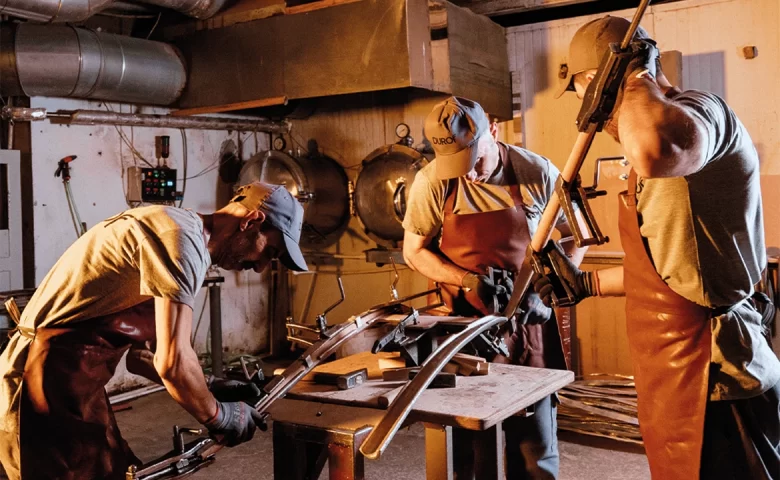
The characteristic curved lines of Thonet chairs are achieved through the steam and bending process. Wooden pieces are exposed to steam in special steaming rooms for a set period. The wood softens under the influence of steam, allowing it to be bent into the desired shapes with the help of metal molds. This process is the most critical step in giving Thonet chairs their unique form. The bent wood is fixed in this shape and dried to harden.
4. Assembly and Joining
After the bending process, the wooden pieces move on to the assembly phase. The various parts of the chair are skillfully joined together to create a sturdy structure. Strong adhesives and screws are used in the joints to ensure a durable and long-lasting build.
5. Surface Treatments and Painting
Once the assembly process is complete, the surface treatments of the chair begin. The wooden surfaces are sanded to smoothness and prepared for painting. While Thonet chairs are often left in their natural wood color, they are sometimes painted in different colors for variety. The painting process enhances both the aesthetic appeal and durability of the chair.
6. Quality Control Process
One of the most critical stages of the production process is quality control. Thonet chairs are meticulously inspected at every stage of the production line. Factors such as wood quality, assembly strength, surface smoothness, and paint quality are checked by expert teams. Any defects found during the quality control process are corrected from the beginning to ensure a perfect product.
7. Wicker Weaving and Other Details
Some Thonet chairs are enriched with wicker weaving details. These woven elements are handcrafted, giving the chairs a classic appearance. Additionally, extra parts are added to finalize the chair’s design.
8. Final Inspections and Packaging
At the end of the production process, the chairs undergo final inspections before moving to the packaging stage. The packaging is done with care to prevent damage during transport. The chairs are wrapped in protective materials and prepared for safe shipping.
Conclusion
The production process of Thonet chairs is a blend of traditional craftsmanship and modern techniques. These iconic chairs undergo a detailed and meticulous production process, resulting in durability and elegance that withstand the test of time. If you use a Thonet chair in your space or workplace, knowing the craftsmanship and effort behind it will make your chair even more valuable.


Leave a comment
You must be logged in to post a comment.